By ROOT Marketing & PR

If you grow it, make it, sell it, or serve it — trade shows might be one of the most powerful tools you should be using.
That’s the message we shared recently at a Colorado Proud webinar for farmers, ranchers, small food producers, bakers, coffee roasters, market vendors, and restaurants across the state (watch that webinar HERE.) The room (virtual as it was) was full of people who make real food with real care — and who have real questions about whether trade shows are worth the time, money, and energy.
Our answer? Yes. With the right preparation, absolutely yes.
Here’s what we covered.

Why Trade Shows Are Worth Your Time
Let’s start with the skeptic’s question: is a trade show actually worth it for a small food business?
Fair question. You’re busy. Time is your most precious resource. So here’s what trade shows give you that almost nothing else does:

Face-to-face relationships.
In a world of emails and DMs, nothing replaces meeting someone in person. Buyers, distributors, press, and fellow producers — trade shows compress months of outreach into a single day.
Market intelligence.
Walking a show tells you what trends are emerging, what competitors are doing, what buyers are looking for. You can’t get that from a screen.
Visibility.
Even without a booth, showing up at the right events puts you on people’s radar. Consistency builds trust over time.
New accounts.
A single conversation at a trade show can open a door that would have taken years otherwise — especially for small producers trying to break into wholesale or retail.
Community.
Colorado’s food community is tight-knit. Trade shows are where you find your people.
One honest caveat: trade shows are rarely an overnight success story. The magic often happens in the follow-up, or at the third show when someone finally remembers your face. Think of them as a long-term investment in relationships — not a quick transaction.
Know Your Shows
Before you decide whether to attend or exhibit, you need to know what shows are out there and which ones are right for you.
Colorado & Regional
Colorado Farm Show (Greeley — January) One of the largest farm shows in the nation. 300+ exhibitors, 30,000+ visitors, 60+ free educational seminars. If you’re a grower or producer of any kind, this is an excellent — and very accessible — starting point.
Slow Food Boulder County (Year-round) Not a traditional trade show, but an absolute goldmine. CSA fairs, workshops, farm dinners, community events. If you’re a farmer, small producer, or restaurant, you should be in this community. Their “Snail of Approval” award carries real weight with consumers and buyers who care about sourcing.
Slow Food Denver (Year-round) Denver’s chapter runs farm dinners, FED workshops, and volunteer events. Great for connecting with chefs, food educators, and mission-aligned producers.
Naturally Colorado (Monthly — events happening mostly in Boulder, Longmont, Denver, Golden) If you’re a small food producer in the CPG or natural products space, Naturally Colorado is where you’ll find your people. Monthly Networking Collisions, educational webinars, office hours with industry experts, and bigger signature events. One of the most valuable communities for Colorado food entrepreneurs at any stage.
National Shows Worth Knowing
Newtopia Now — August 18–20, 2026 | Denver, CO ★
This one deserves special attention: it’s returning to the Colorado Convention Center in Denver this August. Newtopia Now is the natural products industry’s premier discovery show for emerging and mission-driven brands, connecting CPG producers with buyers, retailers, distributors, and investors. It features a grocery-store-style “Market” setup that’s much more approachable for newer brands than a traditional trade show floor. If you’ve ever thought about exhibiting at a national show, this is your moment — right here in your own backyard.
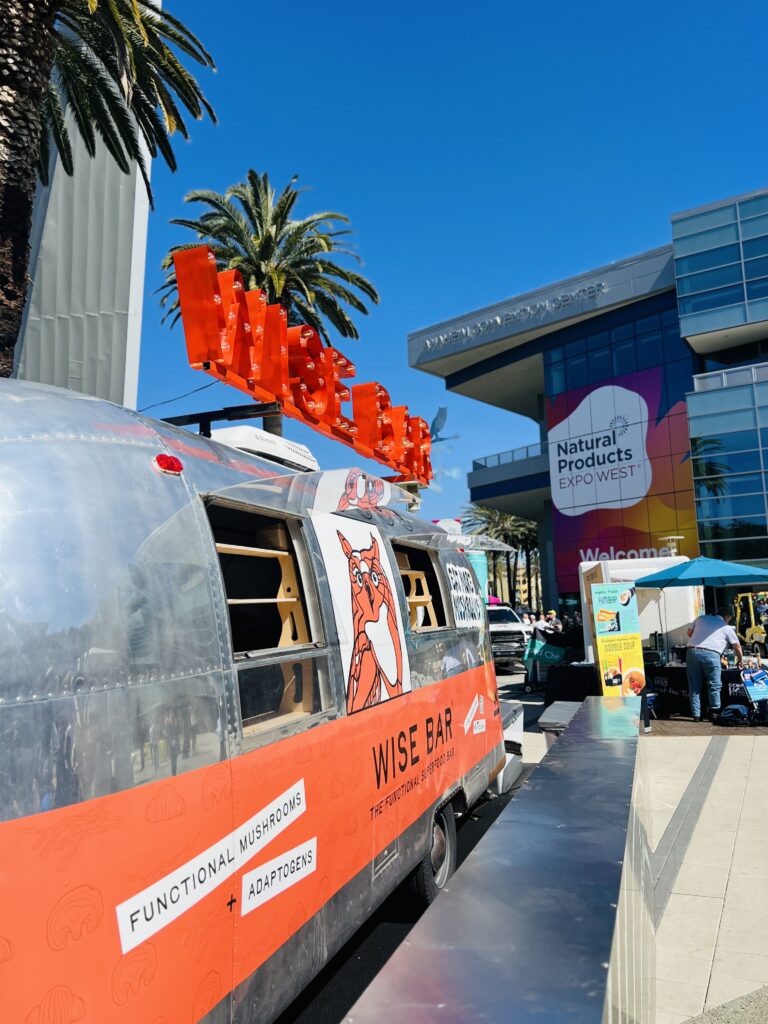
Natural Products Expo West (Anaheim — March)
The Super Bowl of the natural food industry. Tens of thousands of attendees, thousands of exhibitors. Expensive to exhibit, but walking the floor is affordable and incredibly educational. If you’re serious about growing a packaged food brand, Expo West is where you need to be — even just to see the landscape.
Specialty Food Association Fancy Food Shows (San Francisco — January; New York — June)
If you’re making specialty food products — artisan jams, honey, baked goods, specialty coffee — the SFA shows attract the giftable and gourmet buyer community.


Walking the Floor: Getting the Most as an Attendee
This is where we recommend most people start — before investing in a booth. Walking a show costs a fraction of the price of exhibiting, and the learning curve is enormous.

Before You Go
Set clear goals. “I want to learn” is a goal. “I want to leave with three new contacts and a clearer sense of what retailers are buying right now” is a better one. Write it down.
Research who will be there. Most shows publish exhibitor lists in advance. Make a hit list of 10–15 booths or people you want to find — and reach out ahead of time if you can. A quick “I’ll be at the show and would love to stop by” goes a long way.
Bring business cards — or a QR code on your phone that links to your contact info. Physical cards still matter at trade shows.
What to Wear
Wear comfortable shoes. This cannot be overstated. You will walk 5–10 miles at a big show. Bring a second pair. Dress to represent your brand — you don’t need a uniform, but a simple branded shirt tells a story. Bring layers; exhibit halls can be wildly inconsistent in temperature.
How to Network (Without the Awkwardness)
Networking at a trade show is different from a cocktail party. People are there to do business, and they expect to be approached. Here’s how to do it well:
Lead with curiosity. Instead of launching into your pitch, ask a question. “What brings you to the show this year?” People love to talk about themselves — let them.
Know your 30-second intro. Who you are, what you do, why it matters — in about 30 seconds. Practice it until it sounds like a conversation, not a presentation.
Read the room. If someone has a crowd at their booth, drop a card and move on. Don’t try to have a meaningful conversation in a moment that doesn’t allow for it.
Take notes. After each meaningful interaction, jot down something personal — what they mentioned, what they cared about. This makes your follow-up feel genuine instead of transactional.
The Follow-Up Is Where the Magic Happens. Most people skip this step. It’s the most important one.
Within 48 hours of the show: send a brief, personal email or LinkedIn note to every meaningful contact. Reference something specific from your conversation. Propose a clear next step — a call, a sample, a visit.
The show gets you in the door. The relationship is built in the follow-up.

Having a Booth: How to Prepare and Show Up Well
Ready to take the next step? Here’s how to make your booth investment count.
Budget Honestly
Exhibiting is expensive — booth fees, travel, shipping, setup, samples, printed materials. A few ways to be smart about it:
Start small. Many shows offer shared booths, tabletop spaces, or co-op pavilions for emerging brands. Naturally Colorado and state agriculture organizations sometimes subsidize booth fees for Colorado producers — ask.
Think in years, not events. Your first show probably won’t pay for itself. Budget for two or three shows before you assess ROI.
Design Your Booth for Interaction
The best booths aren’t displays — they’re experiences. Taste something. Watch a demo. Take a photo. The more interactive, the more memorable.
Make your space approachable: don’t block the front with a table. Create a flow that draws people in. Offer something worth stopping for — especially hot food at events where everything else is cold samples.
Don’t get trapped behind your table. One of the biggest first-timer mistakes is standing behind the booth all day. Get out front. Engage people as they walk past.

Prepare Your Team
If anyone is staffing alongside you, alignment is everything. Everyone should be able to answer: What is this? What makes it different? Who’s it for? What’s the price and ordering process?
Take breaks. Schedule coverage so everyone gets time to walk the floor and recharge. A tired team is a booth that loses business.
Bring Everything (Because You’ll Forget Something)
A basic checklist: your product plus extras, table covers and signage, scissors and tape, extra shoes, snacks and water for your team, a contact collection system, and printed one-pagers. If you’re shipping ahead, build in extra days — show freight is notoriously unreliable.
Make Your Swag Count
Skip the generic. Attendees are carrying a lot and will discard what everyone else is handing out. A postcard-sized one-pager with your key messages, website, and QR code is one of the best investments you can make. Easy to carry, easy to reference later.
Key Messages: Knowing What to Say
This is the piece that makes or breaks every trade show interaction — and most small food businesses haven’t fully thought it through.
Key messages are the core story of your brand. They’re what you want someone to remember after a two-minute conversation at your booth. And they should be the same across your signage, your handouts, your team’s talking points, and your follow-up email.
Four Questions Your Messages Must Answer
- What problem does your product solve — or what need does it meet?
- What makes you different from everyone else?
- Why should this buyer, retailer, or partner care?
- What’s your broader impact — on your community, the land, or your customers?
For farmers and small producers, that last one is often your biggest asset. The story of where food comes from, how it’s grown, and who’s behind it matters enormously to buyers and consumers right now. Don’t underestimate it.


What Good Messages Look Like
Short (1–2 sentences per point), specific (“raw, single-source honey from hives in Boulder County” beats “really good honey”), authentic (sound like you, not like a big brand), and provable (certifications, awards, numbers, and testimonials all help).
Practice at Three Levels
Have a 30-second version for a quick booth stop, a 2-minute version for a real conversation, and a 5-minute version for a serious buyer or investor meeting. The goal isn’t to memorize a script — it’s to know your story so well that you can tell it in any format, to any audience, without thinking.
Start Where You Are
You don’t need the biggest booth or the flashiest display to succeed at a trade show. You need a great product, a clear story, and the willingness to show up consistently and follow through.
If you’ve never been to a show, start by walking one. The Colorado Farm Show in January is a great entry point for growers. Naturally Colorado’s monthly events are an easy, low-stakes place to practice your messaging and meet the right people. And if you make a packaged food product, Newtopia Now in Denver this August is an opportunity you shouldn’t miss.
The Colorado food community is one of the best there is. Trade shows are where it shows up together. Come find your people.

Questions about how to promote your food brand or prepare for your next show? We’d love to talk.
ROOT is an award-winning PR, marketing, and social media agency dedicated to supporting good food — from those who grow it to those who make, sell, and bring it to life.rootmarketingpr.com